The Challenges Researchers Face When Studying 3-mmc
Updated: Jun 12
In scientific research, the most difficult problems are rarely the ones that look complicated on paper. Instead, they are the quiet, persistent gaps—missing data, inconsistent references, and results that don’t fully align yet. These issues become even more noticeable when studying newer synthetic compounds that fall under the broader category of research chemicals.
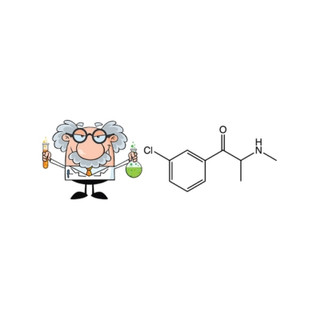
Among these, 3-mmc is often mentioned in analytical and forensic discussions. Not because it is fully mapped or standardized, but precisely because it isn’t. Researchers are still trying to understand its behavior, stability, and analytical profile in a structured, repeatable way. And that makes it less of a straightforward subject and more of an evolving scientific puzzle.

When There Is No Established Scientific Baseline
Most mature areas of chemistry have something researchers rely on without thinking twice: a stable foundation of past studies. Decades of published work, validated testing procedures, and widely accepted reference points make analysis faster and more predictable.
With 3mmc, that kind of foundation is still developing.
So instead of building on existing certainty, researchers often start from a much more basic level. They are not refining knowledge—they are creating it.
This typically begins with very fundamental work such as:
● Confirming molecular identity through repeated testing
● Establishing how the compound behaves under different lab conditions
● Checking stability across time, temperature, and storage environments
● Comparing early results with structurally related compounds
Even these early steps can take longer than expected because there is no universal “standard answer” to compare against.
The Slow and Careful Nature of Scientific Validation
Outside of laboratories, science often looks fast. Instruments generate results quickly, software produces instant graphs, and data appears almost immediately.
But the interpretation of that data is where the real time investment happens.
With compounds like 3-mmc, researchers rarely accept a single result at face value. Every finding needs to survive multiple rounds of questioning.
A typical validation process might involve:
● Running an initial analysis
● Repeating the same test under slightly altered conditions
● Comparing results across different instruments
● Checking for inconsistencies or anomalies
● Repeating again until patterns stabilize
This cycle is not inefficiency—it is caution. In scientific work, speed is less important than certainty.
And certainty only comes when results stop changing.
Why Structural Similarities Create Scientific Confusion
One of the more subtle challenges in chemical research is that different compounds can behave similarly during early analysis.
This is especially relevant when discussing compounds like 3-mmc alongside structurally related substances such as 3cmc.
At a glance—or even in early testing—results can appear close enough to cause confusion. That doesn’t mean the compounds are the same, but it does mean extra care is required.
To avoid misinterpretation, researchers must:
● Cross-check results using multiple analytical techniques
● Confirm identity through reference comparison
● Avoid relying on a single method of detection
● Repeat tests until results are consistent across systems
In many ways, this is where experience matters just as much as equipment. Instruments detect signals. Researchers interpret meaning.
The Ongoing Issue of Limited Reference Materials
A major challenge that often remains behind the scenes is the availability of reference standards.
These are verified samples that serve as a comparison point during analysis. Without them, even highly advanced instruments lose part of their reliability.
When working with 3mmc, limited access to well-established reference materials can slow progress significantly.
This creates practical problems such as:
● Difficulty confirming whether results are fully accurate
● Longer validation timelines
● Increased dependence on secondary comparisons
● Reduced confidence in borderline cases
It’s not that the data is unusable—it’s that it requires more layers of confirmation before it becomes scientifically reliable.
In research, uncertainty is not ignored. It is documented and worked through carefully.
The Rapid Evolution of Research Chemicals
One of the defining characteristics of research chemicals is how quickly the landscape changes.
By the time one compound is studied in detail, another variation may already be appearing in scientific or regulatory discussions. This creates a continuous loop where research never truly “finishes”—it only evolves.
For compounds like 3-mmc, this means:
● Scientific literature can become outdated quickly
● Testing methods need frequent updates
● Databases require constant revision
● Researchers must stay flexible in their approach
It also means that scientific understanding is always slightly behind real-world emergence, which is a normal but challenging part of the field.
Why External Information Can Be Misleading
Outside the lab, information spreads quickly—often faster than scientific validation can keep up.
Search trends like buy 3mmc may appear in online environments, but from a research perspective, these patterns are not useful data sources. They reflect curiosity or visibility, not verified scientific evidence.
This creates a clear divide between:
● Public discussion
● Online interpretation
● Scientific validation
Researchers must deliberately ignore noise and focus only on reproducible, measurable results.
That separation is not always easy, especially when information is widely circulated online before it is scientifically confirmed.
Collaboration Is Not Optional in Modern Research
Another misconception about scientific work is that it is handled by a single expert working independently.
In reality, studying compounds like 3-mmc requires collaboration across multiple disciplines.
Each group contributes something different:
Analytical chemists They focus on identifying chemical structure and verifying composition.
Toxicology researchers They study how compounds behave in controlled biological or experimental contexts.
Data specialists They help identify patterns across large sets of experimental results.
Regulatory professionals They ensure research follows legal and institutional frameworks.
Without this combined effort, research would move much more slowly and be far less reliable.
Why Repetition Is Central to Reliable Science
Repetition is one of the most misunderstood parts of research.
In everyday life, repeating the same task often signals inefficiency. In science, it signals reliability.
For 3mmc, repeated testing is essential because it helps confirm whether results are consistent or accidental.
Researchers often repeat experiments to:
● Eliminate random variation
● Confirm accuracy across conditions
● Identify hidden inconsistencies
● Strengthen confidence in results
Only when repeated outcomes align can a conclusion begin to form.
Even then, conclusions remain open to future refinement.
The Hidden Time Cost of Precision
Scientific research is often measured in results, but the real cost is time.
Every stage—from sample preparation to final interpretation—takes longer than most people expect. And when uncertainty is involved, the timeline expands further.
With compounds in the research chemicals category, this time investment becomes even more significant because:
● Standards may not be fully established
● Methods may still be evolving
● Cross-referencing takes additional steps
● Validation requires multiple layers
What looks like a single experiment is often part of a much longer chain of verification.
Building Knowledge One Step at a Time
Scientific understanding does not arrive all at once. It builds slowly, through repeated observation, correction, and refinement.
In the case of 3-mmc, every study adds a small piece to a much larger picture. Some findings confirm what is already suspected. Others challenge earlier assumptions. Over time, these pieces gradually form a clearer understanding—but only after enough repetition and validation.
This incremental process is what gives scientific research its reliability. It may not be fast, but it is designed to be accurate.
Final Reflection
Studying 3-mmc, 3mmc, and related compounds within the broader field of Aromagic.net highlights how complex modern chemical research really is. There is no single obstacle—only layers of them. Limited reference materials, overlapping structural similarities, evolving methodologies, regulatory constraints, and the constant need for verification all contribute to a slow but necessary process.
Despite these challenges, research continues moving forward. Not through shortcuts or assumptions, but through repetition, collaboration, and careful validation.
And in science, that slow progress is exactly what ensures the results can be trusted.
Visit our website for more information about buy 2-mmc !
Related Links:
Related Tags:
Comments